
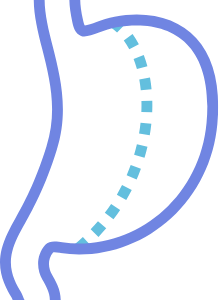
For St. John’s and Newfoundland patients, sleeve gastrectomy offers a straightforward, permanent approach to significant weight loss. The operation removes about 75 to 80% of the stomach, leaving a small, banana-shaped sleeve that satisfies hunger on much smaller meals, so you feel full much sooner.
But it is not just about portion size. The procedure also lowers ghrelin, the body’s main hunger hormone, which is why appetite usually drops noticeably after surgery rather than just portion size. This combination of reduced capacity and lower hunger makes it a powerful, long-term tool for weight loss.
It is performed laparoscopically (keyhole surgery) under general anaesthesia with no implant required. Most patients go home the same day or within 24 hours, and begin losing weight almost immediately.
You’ll meet with our surgical team for a full assessment. This includes reviewing your medical history, BMI, and overall health. You may be asked to follow a pre-operative diet for 1–2 weeks to reduce the size of your liver, which makes surgery safer and easier.
Your surgeon makes a few small keyhole incisions and uses a camera and precision instruments to remove approximately 75–80% of the stomach. The remaining stomach is shaped into a sleeve and sealed with surgical staples. The entire procedure typically takes 60–90 minutes.
Most patients are up and moving within a few hours of surgery. You’ll begin on clear fluids and gradually progress to pureed, soft, and then regular foods over several weeks. Light daily activities can typically resume within 2–3 weeks, and most patients return to work within 1–2 weeks for desk jobs.
Our team will conduct a thorough assessment during your consultation to confirm that sleeve gastrectomy is the right fit for your individual needs and health profile.
Like all surgical procedures, sleeve gastrectomy carries some risks. It’s important to us that every patient feels fully informed before making their decision — and we take time to walk through this with you in detail during your consultation.
Common short-term risks include nausea, acid reflux, and the general risks associated with anaesthesia. Longer-term considerations include nutritional deficiencies, which are easily managed with daily vitamin and mineral supplements and regular follow-up appointments with our team.
It’s also important to understand that sleeve gastrectomy is a permanent procedure — the removed portion of the stomach does not grow back. This is why patient education and readiness are central to everything we do at Revive Bariatric Health.


Want to know what procedure is right for you? Book your appointment and download our intake form today.
This tool is for general informational purposes only and is not medical advice. See your healthcare provider for personalized guidance.